
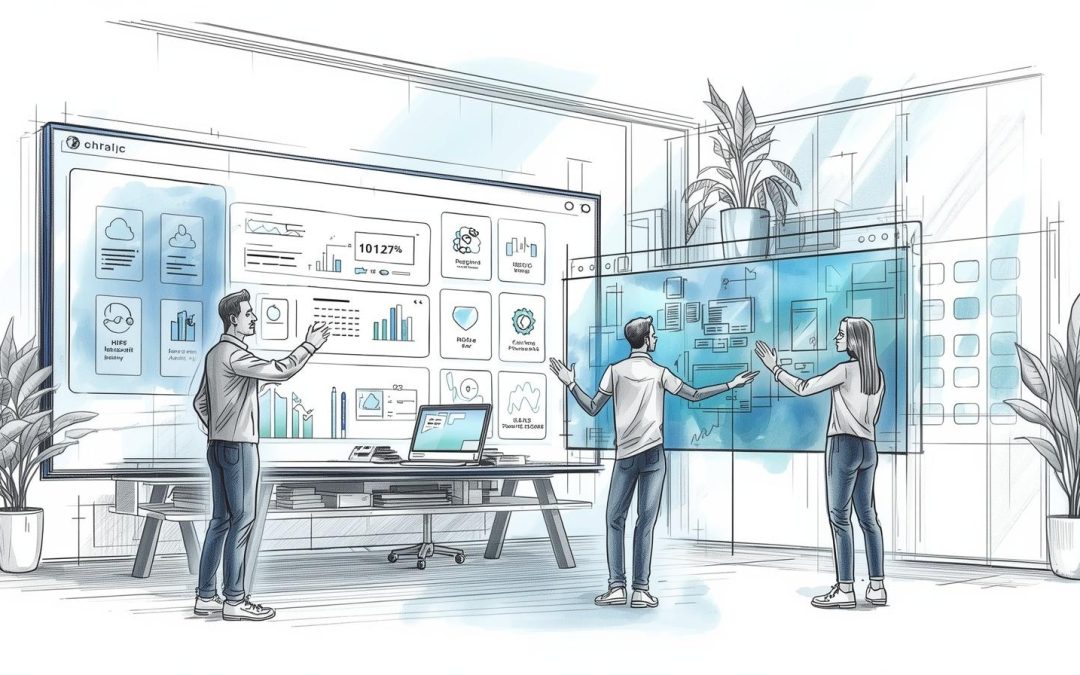
When families search for home care services, they are not simply comparing providers — they are making decisions about the safety, dignity, and well-being of someone they deeply care about.
In the USA and Canada, most families begin this process online. Before making a phone call, they evaluate:
- credibility
- professionalism
- clarity of services
- response accessibility
- trustworthiness of the organization
- ease of next steps
Your website becomes the first experience families have with your care standards.
Many home care agencies invest significantly in staff, compliance, and service quality — yet their website does not reflect the same level of professionalism.
A well-structured healthcare website is not just a marketing asset. It is a trust-building interface that supports:
- client acquisition
- caregiver recruitment
- operational efficiency
- brand credibility
- long-term growth positioning
Agencies that align their digital presence with client expectations gain measurable advantages in inquiries and hiring outcomes.
Families searching for care often experience urgency combined with emotional stress.
Typical scenarios include:
- hospital discharge planning
- sudden health condition changes
- ongoing dementia care needs
- mobility challenges
- caregiver burnout in family members
During this process, decision makers often search:
- home care agency near me
- senior care services in [city]
- private caregivers USA
- personal support worker Canada
- dementia care at home
- 24 hour home care providers
- post surgery home care
- companion care services
- elderly care near me
At this stage, website clarity strongly influences perceived reliability.
Visitors often decide within seconds whether:
- the provider seems trustworthy
- services are clearly explained
- the process feels simple
- the organization appears professional
- contact feels comfortable
This psychological evaluation directly impacts inquiry behavior.
Why Many Home Care Websites Underperform
First Impression Does Not Reflect Care Quality
Healthcare services rely heavily on credibility perception.
Common issues include:
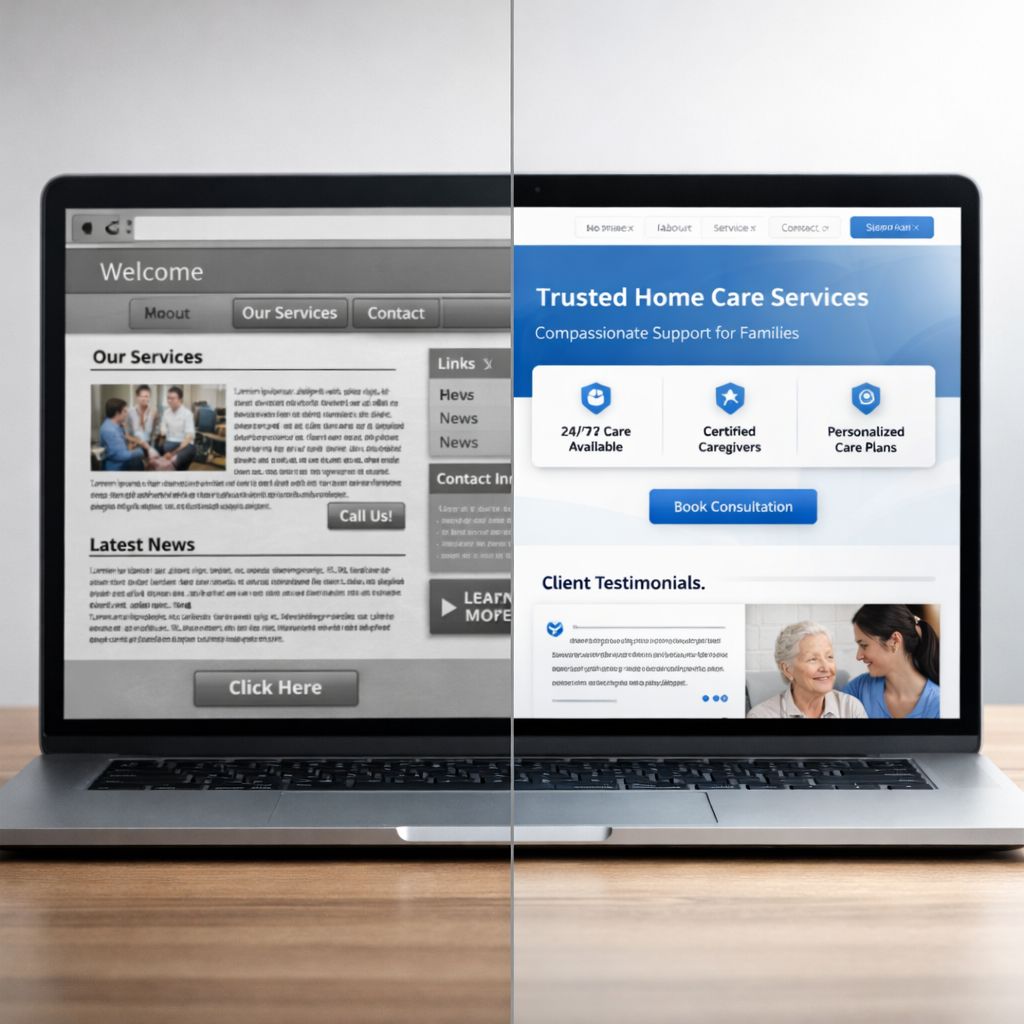
- outdated layouts
- inconsistent typography
- generic stock imagery
- unclear messaging hierarchy
- lack of emotional reassurance
- cluttered information structure
Families subconsciously associate website quality with operational professionalism.
A poorly structured website may unintentionally create hesitation, even when care quality is excellent.
1. Mobile Experience Friction Reduces Inquiry Probability
A majority of healthcare searches occur on mobile devices.
If visitors experience:
slow loading speed
difficult navigation
compressed layout
poor readability
hidden contact options
they often exit before understanding service value.
Mobile usability directly impacts:
inquiry form completion
phone calls
consultation requests
trust perception
Mobile-first structure is essential for modern healthcare providers.
2. Missing Trust Signals Create Uncertainty
Healthcare decisions require emotional reassurance supported by rational validation.
Trust signals help reduce perceived risk.
Key elements include:
- client testimonials
- caregiver qualification transparency
- certifications and compliance references
- years of operational experience
- structured care process explanation
- real team representation
- service guarantees where applicable
- privacy commitment clarity
Trust is built when visitors feel informed, guided, and respected.
3. Trust Architecture Framework for Healthcare Websites
A structured trust framework typically includes:
Credibility Layer
- certifications
- accreditations
- compliance references
- affiliations
- experience indicators
Emotional Reassurance Layer
- compassionate messaging
- family-oriented tone
- clarity of care approach
- transparent communication process
Proof Layer
- testimonials
- case examples
- satisfaction indicators
- structured service descriptions
Accessibility Layer
- visible contact options
- clear response expectations
- easy consultation request flow
4. Service Structure Lacks Decision Clarity
Families often need quick understanding of:
- Types of care available
- Conditions supported
- Service process
- Coverage areas
- Scheduling flexibility
Common service categories searched include:
- Personal care services
- Companion care
- Alzheimer’s and dementia support
- Disability care
- Respite care
- Palliative care
- Live-in caregiver services
- Post-hospital recovery care
- Senior home assistance
Clear information architecture reduces cognitive effort and improves engagement.
5. Inquiry Flow Creates Friction
Many websites unintentionally complicate initial communication.
Examples include:
- Overly complex forms
- Unclear next steps
- Hidden contact options
- Excessive information requests
- Lack of response expectations
- Limited scheduling flexibility
Visitors prefer a guided interaction path.
Inquiry Optimization Framework
High-performing healthcare websites typically structure inquiry flow as:
Step 1: Immediate reassurance
Step 2: Service clarity
Step 3: Low-effort contact option
Step 4: Process transparency
Step 5: response confidence
7. Local SEO Structure Limits Visibility
Many agencies depend heavily on referrals, yet search visibility continues to influence discovery.
Important local SEO components include:
- Service area pages
- Location relevance signals
- Structured headings
- Keyword-aligned service descriptions
- Optimized page structure
- Consistent metadata
- Fast page performance
Search visibility influences long-term inquiry consistency.
Common search patterns include:
- Home care agency in Texas
- Senior care services Toronto
- Elderly care Vancouver
- Home health services California
- Personal support worker Ontario
- In-home care services Florida
- Private caregiver New York
Optimized structure supports discoverability.
Why Healthcare Providers Are Investing in Digital Systems
Healthcare organizations increasingly recognize the operational value of structured digital infrastructure.
Key drivers include:
- Increased online research behavior
- Competition among private providers
- Caregiver hiring challenges
- Need for consistent inquiry flow
- Communication efficiency improvements
- Brand differentiation
- Performance tracking visibility
- Scalable growth readiness
Digital systems help standardize communication and improve client experience continuity.
Conclusion
Families searching for care prioritize clarity, reassurance, and professionalism.
A structured digital experience helps communicate service quality effectively.
When website architecture aligns with client psychology, agencies often experience:
- Improved inquiry consistency
- Stronger credibility perception
- More efficient communication
- Better caregiver recruitment engagement
- Increased long-term visibility
Digital presence should reflect the reliability and compassion that define healthcare services.
About 7Sisters Tech Pvt Ltd
7Sisters Tech partners with service-based businesses and healthcare providers to design structured digital systems that support real operational needs.
Focus areas include:
- High-performance websites
- Conversion-focused UI structure
- Scalable SaaS platforms
- Mobile applications
- API integrations
- Workflow automation systems
- Caregiver recruitment process design
- SEO-aligned website architecture
Approach emphasizes clarity, usability, and sustainable scalability aligned with business objectives.